Understanding Digitization and Physical File Tracking
A common misconception in document management is that digitization eliminates the need for physical file tracking. In reality, the vast majority of organizations require both strategies as complementary components of a comprehensive information management system. This technical article explores the relationship between digitization and physical file tracking, clarifies their distinct roles, and demonstrates why most organizations need both.
Digitization converts paper documents into digital format for storage, retrieval, and workflow automation. Physical file tracking, by contrast, manages the location and movement of original paper documents. These are not competing technologies—they serve different but essential functions within modern organizations.
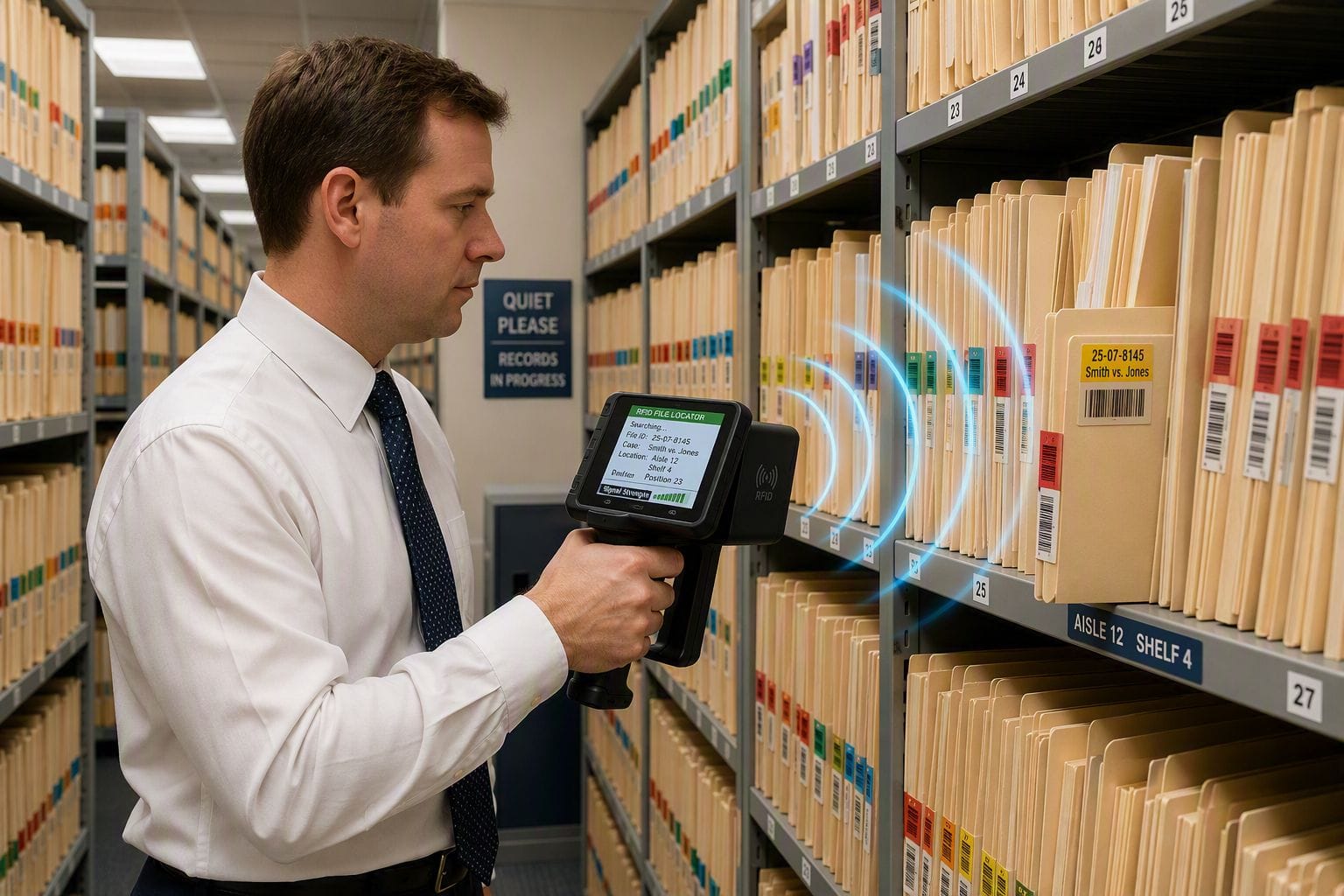
Table of Contents
Defining Digitization and Physical File Tracking
What is Digitization?
Digitization is the process of converting paper documents into digital format—typically as PDF files, scanned images, or structured digital records. Once digitized, documents are stored in a Document Management System (DMS) or similar application that enables:
- Full-text search across document collections
- Integration with business workflows and applications
- Rapid distribution and access without physical retrieval
- Reduced physical storage requirements
- Version control and edit tracking
Digitization focuses on creating a usable, accessible digital copy for operational efficiency. However, digitization alone does not address what happens to the original physical document.
What is Physical File Tracking?
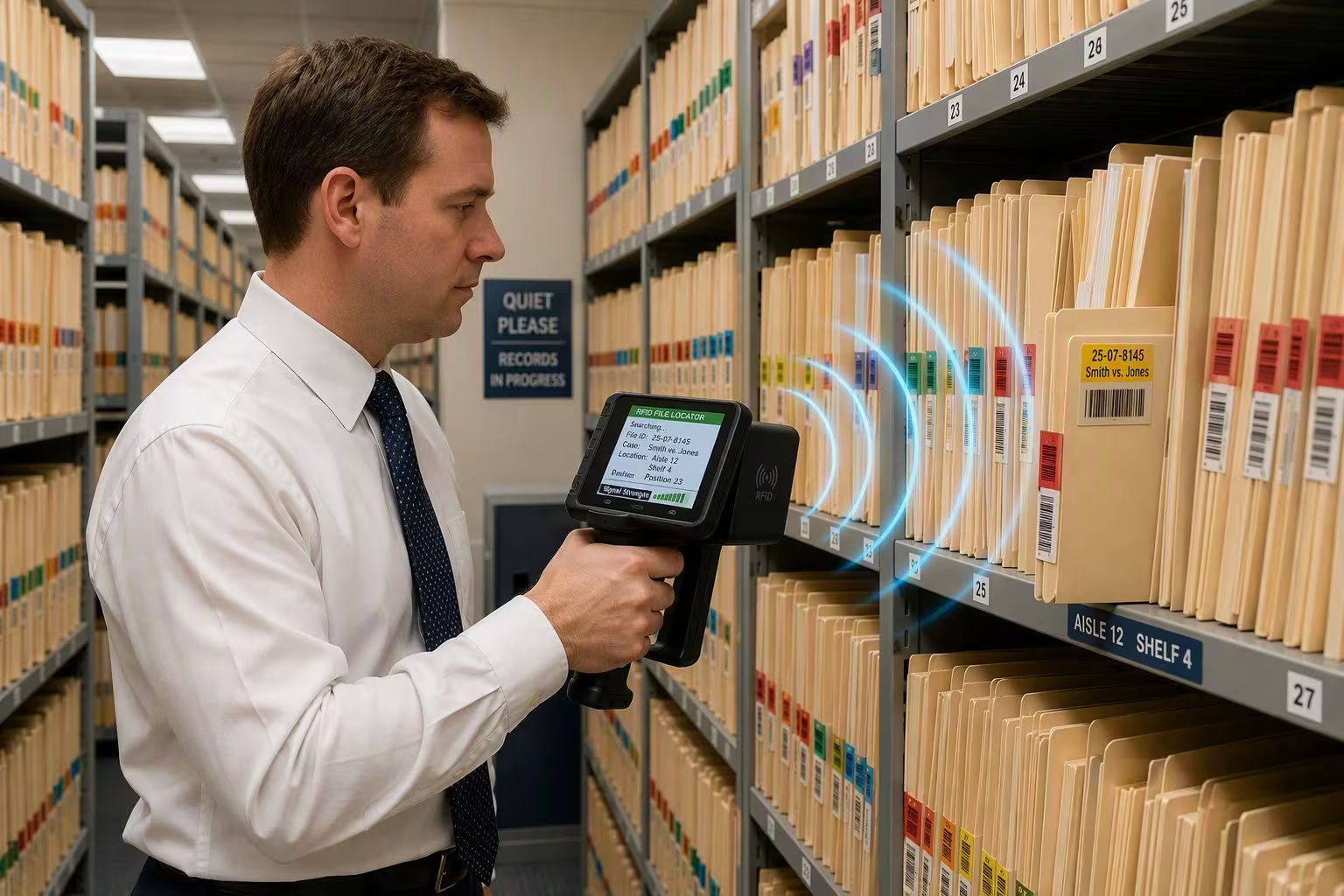
Physical file tracking (also called record management or file circulation tracking) refers to automated systems that monitor the location and movement of original paper documents. Physical file tracking systems provide:
- Real-time location visibility for physical files
- Automated check-in and check-out processes
- Audit trails showing who accessed what and when
- Tamper detection and unauthorized movement alerts
- Chain of custody documentation
- Retention schedule management and destruction tracking
Physical file tracking focuses on ensuring that original documents are secure, accessible, and compliant with legal and regulatory requirements.
Why Organizations Need Both Digitization and Physical File Tracking
The misunderstanding that digitization eliminates the need for physical tracking stems from the assumption that all organizations can eliminate physical files entirely. In reality, this is rarely practical or legally permissible.
Operational Efficiency (Digitization) + Compliance (Physical Tracking)
Digitization improves operational efficiency by enabling rapid access, searching, and distribution of document copies. However, regulatory and legal requirements often mandate retention and tracking of original physical documents. The two systems work together: digitization enables efficient workflows, while physical tracking ensures compliance and legal defensibility.
Litigation and Forensic Requirements
In legal proceedings, opposing counsel may challenge whether a digital copy is an accurate representation of an original document. Organizations that digitize documents while maintaining the originals can defend the integrity of both versions. Additionally, forensic analysis often requires examination of original physical documents.
Multiple Physical Locations
Organizations with files distributed across multiple physical locations require digital access to document content (digitization) combined with tracking of where physical originals are located and how they move between locations (physical tracking). Digital copies enable remote access while physical tracking prevents loss or misplacement.
Regulatory and Legal Requirements for Physical Files
Numerous regulations explicitly require retention and auditable tracking of original physical documents:
Healthcare (HIPAA)
HIPAA requires that covered entities maintain original patient medical records with complete audit trails. Digital copies are permitted for operational use, but originals must be preserved and accessible for audit, inspection, and patient access requests.
Legal Services (Court Rules)
Federal Rules of Civil Procedure and state legal ethics rules require lawyers to preserve original evidence and client files. Discovery rules mandate production of original documents in legal proceedings. Digital copies alone do not satisfy these requirements.
Government (Records Management Act)
Federal agencies must comply with the Federal Records Act, which requires retention of original documents for specified periods with documented disposal procedures. State and local governments have similar requirements.
Financial Services (SOX, SEC Rules)
Sarbanes-Oxley and SEC regulations require financial institutions to maintain original transaction records, signed agreements, and audit documentation for specified periods with tamper-proof audit trails.
ISO and Industry Standards
ISO 15489 (Records Management) and other international standards recognize that organizations must maintain both digital and physical records in accordance with their operational and legal requirements.
Implementing a Hybrid Strategy: Digitization + Physical Tracking
Forward-thinking organizations implement integrated solutions that combine digitization and physical file tracking:
Document Capture and Digitization
When a document arrives or is created, it is scanned into the Digital Document Management System (DMS). The digital version becomes the working copy for operational access and workflow automation.
Physical File Tagging
Simultaneously, the original physical document is tagged with an RFID or barcode identifier and entered into the Physical File Tracking System. The physical document is stored in a secure location with documented access control.
Unified Information Management
The two systems should integrate so that:
- Users searching the DMS can see both the digital document and the physical file location
- When physical files are checked out, the DMS reflects that access
- Compliance reports include both digital access logs and physical file movement records
- Retention policies apply to both digital and physical versions
Access Workflow
Staff access documents through the DMS for normal operations. When original physical files are needed (e.g., for signature, notarization, or court production), the physical tracking system provides location visibility and maintains chain of custody records.
Industry-Specific Requirements for Both Systems
Healthcare Organizations
Hospitals, clinics, and medical practices need digitization for clinician access to patient information during care, and physical file tracking for original records retention, audit compliance, and litigation preparedness.
Legal Firms
Law firms need digitization for efficient case file access by attorneys and staff, and physical file tracking for evidence integrity, chain of custody, and discovery compliance.
Government Agencies
Government offices need digitization for public access and records retrieval, and physical file tracking for Records Act compliance, audit trails, and secure handling of classified or sensitive materials.
Financial Institutions
Banks and financial services firms need digitization for operational efficiency and customer service, and physical file tracking for SOX compliance, regulatory audit readiness, and dispute resolution.
Large Enterprises
Multinational companies managing complex document repositories need digitization for global access and workflow automation, and physical file tracking for legal holds, litigation support, and document lifecycle management.
Cost-Benefit Analysis: Why Both Systems Pay for Themselves
Cost of Implementing Both Systems
Organizations often hesitate to invest in both digitization and physical tracking, viewing them as redundant. However, the integrated cost is modest compared to the consequences of incomplete implementation:
Financial Impact of Digitization-Only Approach
- Regulatory Penalties: Fines for incomplete audit trails and retention violations (often $10,000-$100,000+ per incident)
- Litigation Costs: Loss of cases due to inability to produce original documents or prove chain of custody (millions in some cases)
- Compliance Failures: Failed regulatory audits requiring remediation and repeat audits
- Reputational Damage: Loss of client/customer trust due to document access or compliance issues
Return on Investment for Combined Approach
- Avoided Compliance Violations: Regulatory compliance protects against massive penalties
- Litigation Support: Superior document control enables successful defense of cases
- Operational Efficiency: Digitization eliminates manual file searches and document delivery time
- Reduced Physical Storage: Better inventory management reduces off-site storage costs
- Audit Readiness: Automated compliance reporting reduces audit preparation time and costs
Most organizations recover their investment in integrated solutions within 12-24 months through compliance benefits and operational savings.
Conclusion: A Balanced Approach to Information Management
The answer to "Do you need both digitization and physical file tracking?" is almost certainly yes for any organization dealing with regulated industries, legal requirements, or significant document volumes. Digitization and physical tracking are not competing approaches—they are complementary strategies that together deliver a complete information management solution.
Digitization provides the operational efficiency, rapid access, and workflow integration that modern organizations require. Physical file tracking provides the compliance assurance, security controls, and legal defensibility that regulations and litigation require.
Organizations that implement both systems enjoy superior operational efficiency, regulatory compliance, risk mitigation, and competitive advantage. Those that attempt digitization alone inevitably discover compliance gaps when regulators conduct audits or when litigation demands production of original documents.
The most successful organizations implement integrated solutions where digitization and physical tracking systems work together seamlessly, providing comprehensive visibility and control over all corporate records—both digital and physical.
Ready to Implement a Comprehensive Strategy?
Discover how to integrate digitization with physical file tracking to achieve both operational efficiency and regulatory compliance. Contact GOBO Systems today for a comprehensive assessment.
Learn more about our RFID-based Physical File Tracking System that integrates seamlessly with your digital document management strategy.