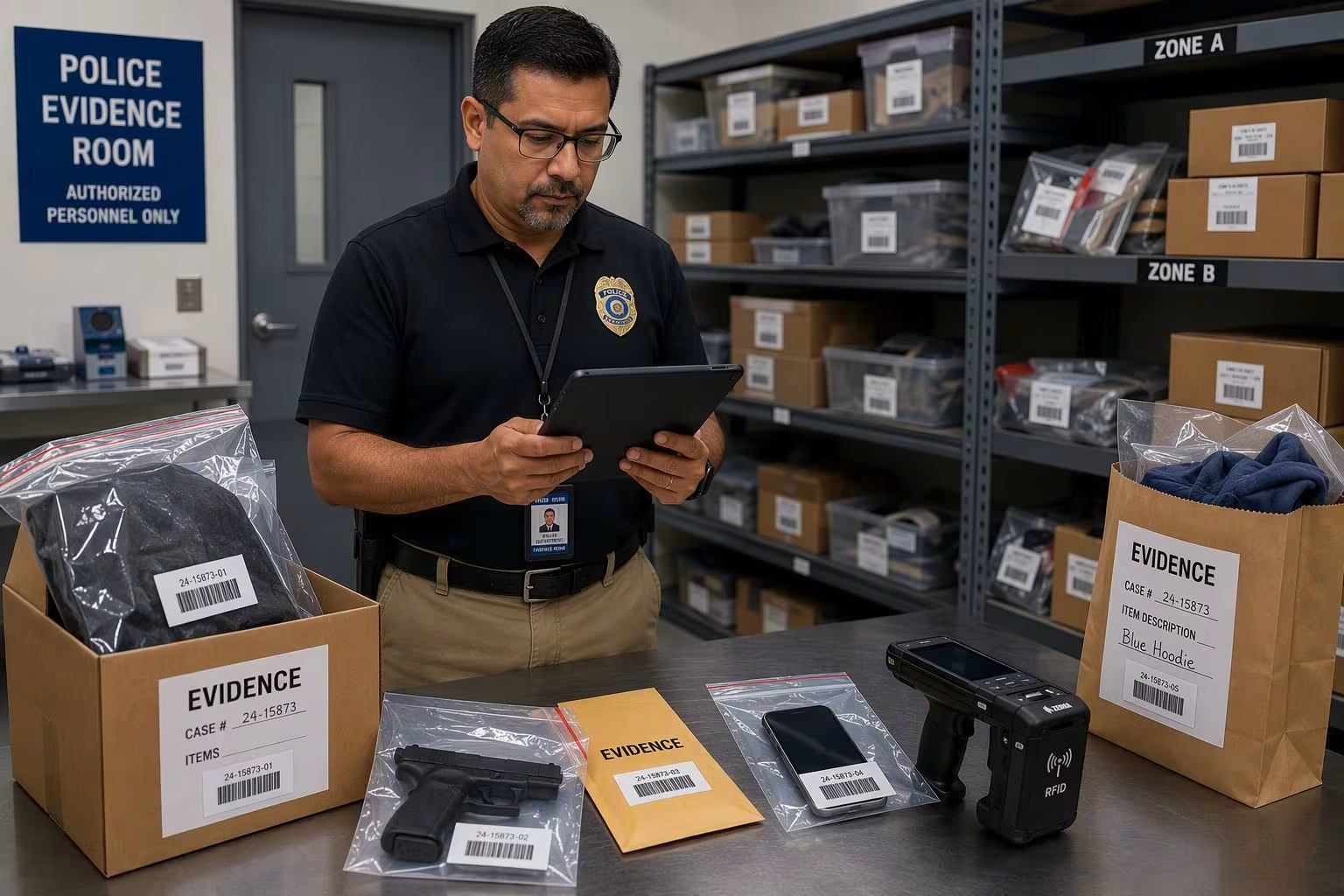
A Technical Blueprint for Modern Evidence Management
Evidence workflows demand precision. A single unlogged handoff, mislabeled package, or delayed retrieval can create legal risk and operational stress. Traditional paper logs and spreadsheet-based tracking often fail under volume, multi-location operations, and strict compliance needs. Barcode and RFID technologies solve this by turning each evidence interaction into a structured, searchable event.
This article explains how to design an evidence tracking architecture using barcode and RFID together. It covers custody events, storage workflows, integration requirements, controls, and rollout phases that help agencies and enterprises build an audit-ready, scalable system.
For teams evaluating implementation, GOBO's Evidence Tracking System combines barcode and RFID workflows with chain-of-custody controls, role-based access, and reporting aligned to real-world evidence operations.
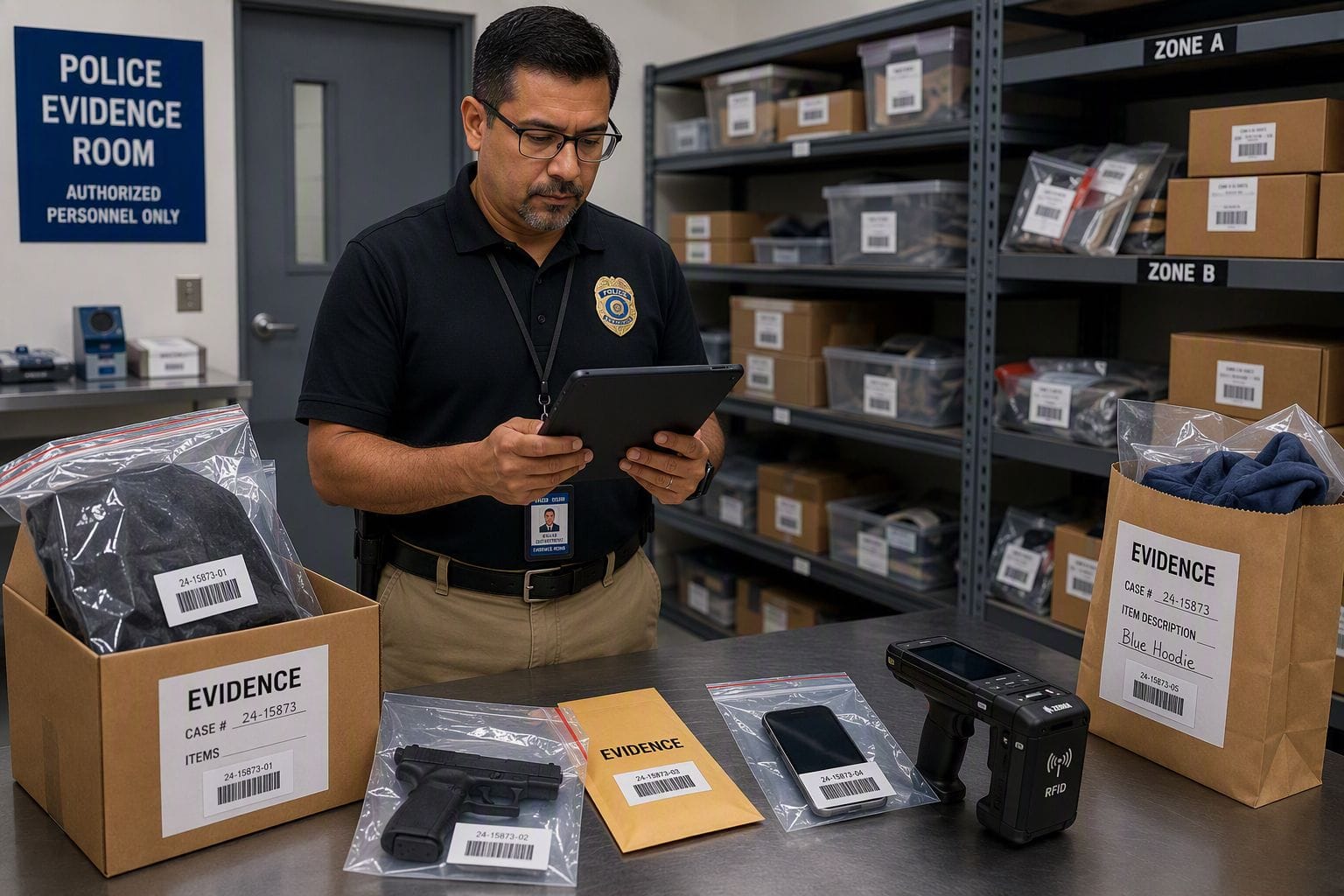
Table of Contents
Mapping the Evidence Lifecycle
Technology decisions should follow workflow realities. Before selecting devices, define the complete evidence lifecycle and required control points.
Intake and Chain of Custody Initialization
At intake, each item receives a unique evidence identifier and packaging label. A barcode is typically printed immediately because it is low-cost and fast to deploy. Metadata such as case number, collection location, collecting officer, and initial condition is captured at this first event. If RFID is enabled, an RFID tag is associated with the same identifier and attached to the evidence package or container.
This first event is critical because all downstream custody records inherit trust from intake quality. Validation rules should prevent incomplete submissions and require mandatory fields before evidence can be stored.
Storage, Movement, and Temporary Release
As evidence moves into vaults, labs, and review rooms, each transfer should be digitally recorded. Barcode scanning at doors, shelves, and workstations establishes deterministic check-in/check-out logs. RFID readers at choke points add passive detection and reduce missed events when multiple items move together.
Temporary release workflows must enforce policy-based approvals. For example, a prosecutor pull request may require supervisor confirmation, while high-sensitivity items require dual authorization. Automated rules reduce policy drift and create consistent evidence handling behavior.
Courtroom Transfer and Return
Court transfers create high risk because deadlines are strict and custody challenges are common. Barcode scans at dispatch and receipt provide explicit handoff records. RFID portal reads can verify tote-level completeness before departure and after return. When discrepancies appear, exception alerts should trigger immediate reconciliation tasks.
Building a Barcode Foundation
Barcode remains the practical baseline for many evidence environments due to low hardware cost, straightforward training, and reliable point-in-time capture.
Label and Symbology Standards
Choose symbologies based on data density and scanner ecosystem. Many teams use Code 128 or QR variants depending on label size and metadata needs. Standardize print templates to include human-readable IDs, tamper indicators, and optional color coding for evidence categories.
Checkpoint Design
Place barcode scan points where custody ownership changes: intake, storage entry, shelf placement, transfer release, lab receipt, court dispatch, and final disposition. This event-driven model produces a clear chronology without requiring constant manual updates.
Operational Controls
Scanner software should enforce user authentication and prevent out-of-sequence actions. For example, an item cannot be checked into a lab if the system still marks it inside a vault. These constraints reduce data ambiguity and improve downstream reporting quality.
Where RFID Adds Strategic Value
RFID enhances evidence operations when volume, speed, and visibility requirements exceed what manual scans can efficiently support.
Hands-Free Zone Awareness
Fixed RFID readers at room boundaries detect tagged items entering and leaving defined zones. This provides near real-time location updates without requiring users to stop and scan each package.
Bulk Inventory and Audit Speed
Routine evidence audits can be time-intensive with barcode-only processes. RFID handheld readers can sweep shelves and bins rapidly, reducing audit time while improving detection of misplaced or missing items.
Exception Detection
RFID rules can trigger alerts for unauthorized movements, unexpected exits, or prolonged dwell time in temporary zones. These proactive controls shift operations from reactive search to preventive monitoring.
Designing a Hybrid Barcode + RFID Architecture
A hybrid model combines barcode precision with RFID automation. Both technologies should map to one evidence master record in your tracking platform.
Unified Data Model
Use a single evidence entity with linked identifiers: barcode ID, RFID EPC (if present), case metadata, custody timeline, and storage state. This avoids duplicate records and supports consistent reporting across device types.
Integration Layer
Integrate with RMS, case management, or ERP systems using APIs and event queues. Synchronization should include user identities, case updates, and disposition outcomes. If external systems are unavailable, staged exports with reconciliation logs can still maintain traceability.
Security Design
Apply role-based access controls, immutable audit logs, and signed event records. Sensitive operations such as evidence deletion, destruction approval, and record correction should require elevated privileges with dual-control verification.
Compliance, Security, and Audit Defensibility
An evidence platform is only as strong as its ability to prove integrity. Auditors and legal stakeholders need verifiable custody history, not just current location.
- Capture actor, timestamp, location, and action reason for every custody event.
- Retain immutable logs for policy-defined retention periods.
- Attach digital artifacts such as signatures, photos, and transfer notes.
- Run scheduled exception reports for overdue returns, unknown locations, and policy violations.
- Document SOP mapping so each workflow step aligns to compliance requirements.
These controls are especially important for law enforcement, legal teams, forensic labs, and regulated enterprises where evidentiary integrity directly impacts case outcomes.
Implementation Roadmap
Most teams achieve better adoption with phased rollout rather than full replacement.
Phase 1: Baseline Standardization
Define evidence taxonomy, label standards, user roles, and custody event types. Launch barcode workflows for intake, storage, and transfer.
Phase 2: Process Hardening
Add validation rules, supervisory approvals, exception queues, and KPI dashboards. Integrate with upstream/downstream systems to remove duplicate data entry.
Phase 3: RFID Expansion
Introduce RFID in high-volume or high-risk areas such as vault boundaries, transfer docks, and large archive zones. Measure throughput and error reduction before scaling further.
Phase 4: Continuous Optimization
Use analytics to tune shelf layout, staffing windows, reader placement, and policy thresholds. Periodically test chain-of-custody scenarios to verify operational resilience.
Operational KPIs and ROI Model
Track objective metrics before and after implementation to quantify value.
- Average evidence retrieval time
- Audit cycle duration and completion rate
- Missing or misfiled evidence incidents
- Chain-of-custody exception count
- Manual data entry hours per week
- Court-related retrieval SLA compliance
Most organizations find the strongest ROI from labor reduction, lower compliance risk, faster audits, and improved legal confidence in custody history quality.
Conclusion
Barcode and RFID are not competing choices in evidence management. Barcode provides a dependable operational baseline, while RFID extends visibility and automation where it matters most. A hybrid architecture aligned to policy, workflow, and system integration requirements creates a defensible, scalable evidence program that supports both day-to-day operations and courtroom scrutiny.
Next Step for Evidence Teams
If your agency is modernizing evidence handling, begin with a workflow and custody-event mapping workshop. That blueprint will reveal where barcode is sufficient and where RFID delivers immediate operational value. You can also evaluate GOBO's Evidence Tracking System to accelerate rollout with built-in chain-of-custody workflows and audit-ready tracking.