Quick Answer
Manual weapon registers cannot keep pace with modern armory operations. They introduce human error, delay issue and return, and fail audits. A Weapon Tracking System — typically an RFID Weapon Tracking System paired with an Armory Management System — replaces paper logs with automated custody records, biometric authentication, and real-time inventory. For law enforcement, a Police Armory Management System such as the GOBO Weapon Tracking System gives commanders instant visibility of who is armed, where each firearm is, and a legally defensible audit trail.
Quick Takeaways
- Manual weapon registers are a liability - illegible entries, missed sign-offs, and lost pages directly undermine accountability and compliance.
- Technology is rapidly transforming armory management: organizations that delay digital adoption fall further behind operationally and regulatorily every year.
- Every minute spent on manual paperwork is a minute taken away from mission readiness - digital systems automate routine administration so personnel focus on operations.
- Manual registers offer zero real-time visibility; you cannot know where a weapon is or who has it without physically searching records.
- A single missing entry in a manual register can invalidate an entire audit, trigger regulatory action, or compromise a legal investigation.
- The GOBO Weapon Tracking System is an RFID Weapon Tracking System and Armory Management System that closes those gaps with RFID portals, biometrics, and automated audit trails — including Police Armory Management System workflows for shift issue, investigations, and inspections.
Key Terms Defined
- Weapon Tracking System
- Digital software that records the real-time location, custody, and movement of firearms so organizations can replace paper registers with a complete, searchable chain of custody.
- RFID Weapon Tracking System
- A Weapon Tracking System that uses RFID tags and portal readers to log issue, return, and unauthorized movement automatically — without line-of-sight scanning or handwritten entries.
- Armory Management System
- A platform that governs armory operations end to end: weapon issue and return, identity verification, inventory, maintenance history, overdue alerts, and compliance reporting.
- Police Armory Management System
- An Armory Management System configured for law enforcement: shift-start issue, duty-weapon accountability, supervisor visibility of who is armed, and investigation-ready records. The GOBO Weapon Tracking System serves as a Police Armory Management System for precincts and multi-site agencies.
Table of Contents
- The Manual Register Problem in Modern Weapon Management
- Why Manual Weapon Registers Are Counterproductive
- How Manual Registers Undermine Operational Readiness
- Technology is Rapidly Changing the Weapon Management Landscape
- Critical Limitations of Manual Weapon Registers
- What a Weapon Tracking System Delivers
- Manual Register vs RFID Weapon Tracking System
- The Competitive and Operational Disadvantage of Staying Manual
- Why GOBO for Weapon Tracking and Armory Management
- Conclusion
- Frequently Asked Questions
The Manual Register Problem in Modern Weapon Management
Introduction
Walk into any armory still relying on paper registers and you will see the same story: binders full of handwritten entries, some illegible, some incomplete, some missing altogether. Personnel queue at the armory window while an officer manually searches through pages to verify a weapon's status. An inspector arrives and the armory officer scrambles to reconcile physical inventory against weeks of logged entries. The entire process is slow, error-prone, and structurally incapable of meeting the accountability standards that modern law enforcement agencies, military organizations, and correctional facilities are held to.
The world of weapon management has changed dramatically. RFID technology, biometric authentication, digital signatures, and cloud-connected armory platforms now exist specifically to replace paper registers - not as luxury upgrades, but as operational necessities. Organizations that continue to depend on manual registers are not merely working inefficiently; they are actively placing themselves at a disadvantage in accountability, compliance, and operational readiness.
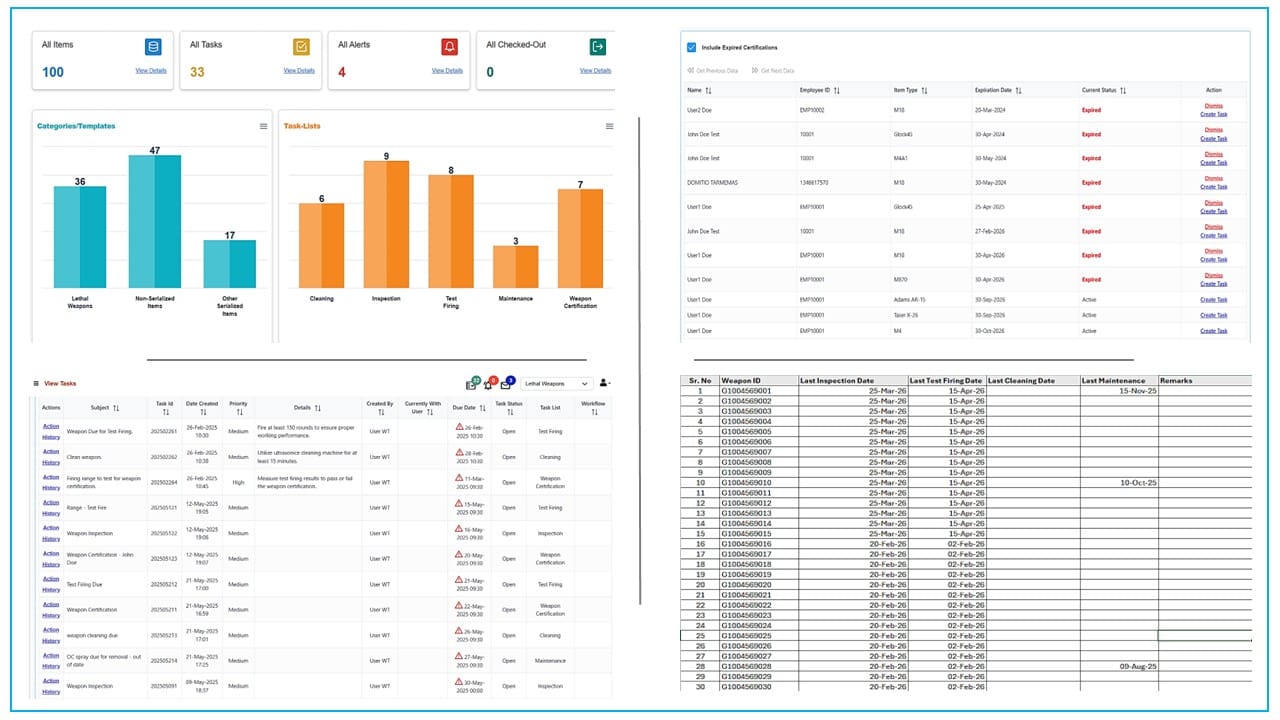
This blog examines why paper registers fail, how they slow operational readiness, and how a modern Weapon Tracking System — specifically an RFID Weapon Tracking System and Armory Management System such as GOBO — replaces those logs for police, military, and correctional armories.
Why Manual Weapon Registers Are Counterproductive
A manual weapon register was designed for a different era - one with smaller inventories, slower operational tempos, and less stringent compliance requirements. Today's environment has fundamentally outgrown it. Using a manual register in a modern armory is not simply a matter of preferring old methods over new ones; it is a choice that actively works against the organization's interests.
Human Error Is Inevitable - and Costly
Every manual entry is an opportunity for error. Transposed serial numbers, missing signatures, wrong dates, skipped entries during high-tempo operations - these are not exceptional failures; they are routine outcomes of any paper-based system operating under real-world pressures. In weapon management, a single recording error can mean a discrepancy between physical inventory and documented records, triggering a full audit investigation, disciplinary action, or regulatory penalty. The consequences of documentation errors in weapon accountability are significantly more severe than in most other domains precisely because the assets involved are lethal.
Manual Registers Cannot Scale
As organizations grow, as rosters expand, and as operational complexity increases, manual registers do not scale. A register that worked adequately for an armory of 50 weapons becomes unmanageable at 500. Reconciling hundreds of entries across multiple shift changes, tracking accessories and ammunition alongside primary weapons, and maintaining consistent documentation standards across different personnel and different time periods is simply beyond what a paper register can reliably support.
Paper Records Are Fragile and Finite
Paper can be damaged, destroyed, misfiled, or deliberately altered. A water leak, a fire, or even a misplaced binder can erase months of custody records with no recovery path. Unlike digital systems with redundant backups, manual registers offer no protection against physical loss. The destruction of weapon accountability records - regardless of cause - creates serious legal and regulatory exposure for the organization.
How Manual Registers Undermine Operational Readiness
Operational readiness is the ability of a unit or organization to deploy and execute its mission immediately and effectively. Weapon accountability is a foundational pillar of that readiness. Manual registers quietly erode that foundation in ways that may not be immediately visible until a critical moment reveals the gap.
Weapon Issue and Return Becomes a Bottleneck
In high-tempo environments - pre-deployment preparations, shift changes in law enforcement, emergency callouts - every minute at the armory window matters. Manual sign-out processes require an armory officer to locate the register, find the correct weapon record, verify authorization, write the entry, obtain a signature, and confirm the physical weapon. The same process in reverse for returns. These steps take time that digital systems compress to seconds through automated RFID detection and biometric sign-off. Under manual processes, the armory itself becomes a bottleneck to operational speed.
No Real-Time Visibility Means No Real-Time Command
A commander who needs to know immediately which weapons are issued, to whom, and for what purpose cannot get that information from a manual register without physically going to the armory and searching through records. There is no dashboard, no alert system, no instant query capability. In situations where quick decisions depend on accurate inventory knowledge - emergency deployments, lockdowns, incident responses - manual registers leave command operating blind. Digital systems provide live inventory status to authorized personnel at any moment, from any location.
Overdue Weapons Go Undetected
Manual registers have no automatic alert mechanism. If a weapon is not returned on schedule, the register does not notify anyone. Discovery depends entirely on an armory officer manually reviewing entries and cross-referencing expected return dates - a process that is inconsistent, dependent on individual diligence, and easily overlooked during busy periods. Digital tracking systems generate automatic overdue alerts, ensuring that no weapon remains unaccounted for beyond its authorized period without immediate notification to the appropriate personnel.
Inventory Counts Take Hours - Not Minutes
Conducting a physical inventory count against a manual register is a time-consuming, labor-intensive exercise. Every weapon must be physically matched to a log entry. Every discrepancy must be traced back through pages of handwritten records. RFID-enabled digital systems can complete a full inventory count in minutes, automatically reconciling physical assets against system records and flagging any discrepancies in real time. The difference in armory officer time and operational disruption is substantial.
Technology is Rapidly Changing the Weapon Management Landscape
The gap between what manual registers can deliver and what digital systems now offer is not static - it widens every year. Technology continues to advance, regulatory expectations continue to rise, and organizations that adopted digital weapon tracking years ago are now operating at a level of accountability and efficiency that manual-register organizations simply cannot match.
RFID Technology Has Matured and Is Cost-Effective
Radio Frequency Identification has matured into a practical foundation for an RFID Weapon Tracking System. Tags on weapons communicate with readers at armory entry and exit points, logging movements without handwritten entries. What once required a team of officers managing paper can now be handled by an Armory Management System automatically, accurately, and continuously.
Biometric Authentication Has Become Standard
Fingerprint readers and facial recognition systems are no longer experimental technology. They are embedded in smartphones, access control systems, and purpose-built armory management platforms. Biometric authentication ensures that every weapon transaction is tied to a verified, identified individual - eliminating proxy sign-offs, forged signatures, and unauthorized access that paper registers cannot prevent.
Regulatory Expectations Are Evolving
Oversight bodies, inspection authorities, and regulatory frameworks governing weapon accountability are increasingly expecting - and in some contexts mandating - digital audit trails. Paper-based records are increasingly scrutinized, challenged, and found insufficient during formal audits and legal proceedings. Organizations continuing with manual processes face growing compliance risk as the regulatory environment evolves around the capabilities that digital systems now provide.
Peer Organizations Have Already Made the Transition
Law enforcement agencies, military units, and correctional facilities across the world have already transitioned to digital weapon tracking platforms. Those organizations now operate with faster processes, cleaner audits, and greater command confidence. Organizations that have not yet made this transition are not simply maintaining the status quo - they are falling behind a standard that their peers have already established.
Critical Limitations of Manual Weapon Registers
1. No Tamper-Proof Records
Manual registers can be altered after the fact. Entries can be erased, pages can be removed, and records can be rewritten to conceal accountability failures. A digital system with a tamper-proof audit trail makes retroactive alteration technically impossible - every entry is time-stamped, user-attributed, and locked against modification. This is not a theoretical concern; in armories operating under high pressure with accountability stakes, the temptation and opportunity for record manipulation in manual systems is real.
2. No Multi-Location Coordination
Organizations with weapons distributed across multiple sites - precincts, forward operating bases, correctional wings, border posts - face a fundamental limitation with manual registers: there is no consolidated view. Each location maintains its own paper records, and reconciling inventory across locations requires physical collection and manual comparison of records from every site. Digital platforms provide unified visibility across all locations, instantly, from a single interface.
3. No Integration with Maintenance and Inspection Records
A complete weapon accountability record should include not just custody transactions but also maintenance history, inspection records, and serviceability status. Manual registers typically separate these into different logs - or omit them entirely - making it impossible to get a complete picture of a weapon's status and history in one place. Digital systems maintain a unified record covering custody, maintenance, inspection, and condition throughout the weapon's entire lifecycle.
4. No Exception Management
Manual registers provide no automated exception detection. Overdue returns, unauthorized possession, inventory mismatches, expired certifications, and missing weapons are invisible in a paper register until someone manually identifies the discrepancy. Digital systems continuously monitor for exceptions and alert the right people immediately, converting reactive discovery into proactive management.
5. Audit Preparation Is a Major Operational Burden
Preparing for a regulatory audit or inspection under a manual system can require days of work - gathering and organizing paper records, reconciling entries, correcting inconsistencies, and preparing summary documentation. Digital systems generate audit-ready reports instantly. The administrative burden that manual registers impose is not just inefficiency; it is organizational cost measured in personnel hours that could be directed toward operational activities.
What a Weapon Tracking System Delivers
Moving from paper to a Weapon Tracking System is not just replacing binders with screens. An RFID Weapon Tracking System combined with an Armory Management System changes what an armory can prove: who had a firearm, when it moved, and whether it is still accounted for.
Automated, Accurate Transaction Records
Every weapon check-out and check-in is recorded automatically when the weapon passes through an RFID-enabled armory point. The transaction is time-stamped, linked to the individual through biometric verification, and stored immediately in the system - with zero manual data entry and zero opportunity for human recording error.
Real-Time Inventory Visibility
At any moment, authorized personnel can query the system to see the exact status of every weapon in inventory - who has it, when it was issued, what it is authorized for, and when it is expected to return. This visibility extends across all locations in a multi-site deployment, giving command a complete operational picture without physical presence at any armory.

Biometric Security at Every Transaction
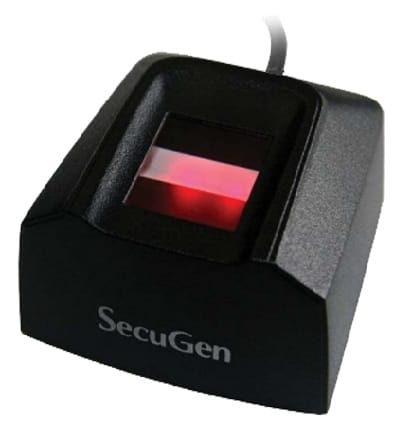
Fingerprint or facial recognition verification ensures that weapon transactions are authorized and non-repudiable. No one can claim they did not receive a weapon when biometric data confirms the transaction. This level of security is structurally impossible in a manual register environment where signatures can be forged or signed by proxy.
Proactive Alert and Exception Management
Digital systems monitor weapon status continuously and alert the right personnel the moment an exception occurs: an overdue return, an unauthorized exit from a secured area, an inventory mismatch, or a weapon leaving its designated zone. Organizations move from reacting to problems discovered during periodic checks to addressing exceptions as they occur - before they escalate.
Instant Audit-Ready Reporting
Complete custody histories, transfer logs, and inventory reports are available at the click of a button. Audit preparation becomes a minutes-long exercise rather than a days-long scramble. The GOBO Weapon Tracking System generates tamper-proof Armory Management System reports that satisfy inspections and legal proceedings without reconstructing paper records.
Manual Register vs RFID Weapon Tracking System
| Capability | Manual Weapon Register | RFID Weapon Tracking System |
|---|---|---|
| Transaction Recording | Manual, handwritten, error-prone | Automated via RFID, instant and accurate |
| Real-Time Inventory Visibility | None - requires physical record search | Live dashboard, query at any time |
| Identity Verification | Handwritten signature, easily forged | Biometric authentication, non-repudiable |
| Overdue Weapon Alerts | None - manual review required | Automatic alerts, immediate notification |
| Unauthorized Movement Detection | None | RFID portal alerts, instant notification |
| Tamper Protection | None - records can be altered | Tamper-proof, locked audit trail |
| Multi-Location Support | Separate paper registers, no consolidation | Unified platform, all locations in one view |
| Inventory Count Speed | Hours of manual cross-referencing | Minutes via automated RFID scan |
| Audit Preparation | Days of administrative work | Instant report generation |
| Record Durability | Vulnerable to physical damage, loss | Redundant digital backups, recoverable |
| Maintenance History Integration | Separate logs or absent entirely | Unified lifecycle record per weapon |
| Scalability | Breaks down with inventory growth | Scales seamlessly with organization |
The Competitive and Operational Disadvantage of Staying Manual
The organizations that bear the greatest consequences of manual weapon register dependency are not abstract entities - they are the law enforcement officers who stand at armory windows waiting for slow check-out processing, the commanders who cannot get an instant weapon status report before an emergency deployment, the armory officers who spend entire days preparing for an inspection, and the legal teams defending accountability failures that proper digital records would have prevented.
Law Enforcement Agencies
Police departments need both speed and proof. Officers must be issued weapons quickly at shift start; supervisors must know who is armed; internal affairs needs a custody record that cannot be rewritten. Paper registers fail all three at once. A Police Armory Management System — the law-enforcement configuration of a Weapon Tracking System — shortens the armory window, gives live duty-weapon status, and produces investigation-ready logs. Agencies that adopt an RFID Weapon Tracking System typically report faster shift turnover and far less time preparing for inspections.
Military Organizations
Military weapon accountability standards are among the most demanding in the world. Inventories are large, accountability requirements are strict, and the consequences of a discrepancy - even a single unaccounted-for weapon - can trigger investigations up the command chain. Deployment scenarios require rapid, accurate weapon issue and return processing under time pressure. Manual registers are fundamentally ill-suited to this environment. Digital systems provide the speed, accuracy, and audit-readiness that military accountability standards demand.
Correctional Facilities
In correctional settings, weapon control is a critical security function. Every weapon issued to a corrections officer must be accounted for at all times; every return must be verified; no weapon can remain unaccounted for within or near a facility. The security consequences of a missing weapon in a correctional environment are severe. Manual registers introduce the exact type of accountability gaps - missed entries, undetected overdue returns, no unauthorized exit alerts - that correctional facilities can least afford. Digital tracking systems provide the continuous, automated accountability that correctional weapon management requires.
Why GOBO for Weapon Tracking and Armory Management
The GOBO Weapon Tracking System is an RFID Weapon Tracking System and Armory Management System built to replace manual registers. For police departments it also functions as a Police Armory Management System, covering shift issue, live custody, and inspection-ready reporting.
Purpose-Built for Weapon Accountability
Unlike generic asset tools adapted for firearms, the GOBO Weapon Tracking System is designed as an Armory Management System from the ground up — serial-number tracking, accessories and ammunition, biometric check-out, and compliance reporting for law enforcement, military, and corrections.
RFID Automation Eliminates Manual Entry Entirely
RFID tags on each weapon communicate with armory portal readers automatically. When a weapon moves through a check-out or return point, the transaction is logged instantly - no manual entry, no handwriting, no missed signatures. The elimination of manual data entry eliminates the single largest source of error and accountability failure in paper-based systems.
Biometric Authentication Ensures Non-Repudiable Accountability
Every weapon transaction in the GOBO system is authenticated biometrically, tying each custody transfer to a verified individual with absolute certainty. Combined with digital signature capture, the system creates accountability records that cannot be disputed - providing the evidentiary strength that legal proceedings and disciplinary investigations require.
Real-Time Alerts Replace Reactive Discovery
The GOBO RFID Weapon Tracking System monitors status continuously and alerts on overdue returns, unauthorized exits, inventory mismatches, and access anomalies — so problems are handled as they occur, not during the next count.
Multi-Location, Centralized Command
For organizations operating across multiple armory locations, the GOBO platform provides a single unified view of all weapon inventory across all sites. Command can see the complete picture at any time without depending on reports from individual armory officers or physical record collection. This centralized visibility is structurally impossible with manual registers.
Comprehensive Implementation and Transition Support
GOBO Systems provides end-to-end implementation support - from RFID tagging of existing inventory and system configuration to user training, process definition, and ongoing operational support. The transition from manual registers to digital tracking is managed as a structured project, ensuring that no accountability gap exists during the changeover period and that personnel are confident and competent from day one of live operation.
Replace Your Manual Register with a System That Keeps Pace
Explore the GOBO Weapon Tracking System — an RFID Weapon Tracking System and Police Armory Management System — or contact us to discuss your armory requirements.
Conclusion
Manual weapon registers are not just outdated - they are actively counterproductive in today's operational and regulatory environment. Every handwritten entry is a risk of error. Every paper page is a vulnerability. Every manual query is time stolen from operations. Every missed entry is a potential compliance failure. And every day that an organization continues with manual registers while the technology landscape advances around it is a day it falls further behind the standard that its peers and regulators increasingly expect.
Law enforcement agencies, military organizations, and correctional facilities all share the same fundamental requirement: complete, accurate, and instantly accessible weapon accountability. Digital weapon tracking systems deliver precisely that - and do so faster, more reliably, and more cost-effectively than any paper register ever could.
The GOBO Weapon Tracking System closes that gap. As an RFID Weapon Tracking System and Armory Management System — and as a Police Armory Management System for law enforcement — it turns paper-era accountability into live custody, faster issue, and inspection-ready records.
Frequently Asked Questions
Learn More
Ready to move beyond paper registers? See the GOBO Weapon Tracking System — an RFID Weapon Tracking System and Police Armory Management System — or contact us to discuss your armory.