Quick Answer
Police departments need digital evidence management systems to prevent lost evidence, ensure proper chain of custody documentation, and maintain evidence security and integrity throughout criminal investigations. Manual evidence management creates legal compliance risks, case dismissals, and operational inefficiency. A modern Evidence Tracking System provides real-time visibility, automated chain of custody, secure access controls, and tamper detection-transforming how law enforcement manages physical evidence and ensuring criminal cases survive legal scrutiny.
Quick Takeaways
- Evidence crisis: Police departments lose, misplace, or mishandle evidence at alarming rates, leading to case dismissals, civil liability, and public trust erosion.
- Chain of custody problems: Manual logbooks and spreadsheets cannot create legally defensible chain of custody documentation required for evidence admissibility in court.
- Security vulnerabilities: Without digital access controls and tamper detection, evidence is at risk of unauthorized access, contamination, or intentional tampering.
- Investigator inefficiency: Law enforcement officers waste hours searching for evidence instead of solving cases, reducing case clearance rates and public safety outcomes.
- Legal exposure: Inadequate evidence management creates cases dismissed on evidence handling grounds, Brady disclosure violations, and civil rights litigation risks.
- Digital solution: The GOBO Evidence Tracking System modernizes evidence management with RFID automation, real-time tracking, and legally defensible chain of custody documentation.
Table of Contents
- Introduction: The Evidence Management Crisis in Law Enforcement
- Challenges Police Departments Face Managing Physical Evidence
- Why Manual Evidence Management Fails
- Why Evidence Management Slows Criminal Investigations
- Digital Evidence Management: The GOBO Solution
- Benefits of Digital Evidence Tracking for Police Departments
- Conclusion
- Frequently Asked Questions
Introduction: The Evidence Management Crisis in Law Enforcement
Across law enforcement agencies at federal, state, and local levels, a critical crisis persists: deteriorating evidence management systems that undermine criminal investigations, create legal liability, and erode public confidence in the criminal justice system. While crime laboratories have evolved and investigative techniques have advanced, many police departments still manage physical evidence using methods from decades past-manual logbooks, filing cabinets, paper-based chain of custody documentation, and spreadsheets designed for other purposes.
This disconnect creates devastating consequences: cases are dismissed because courts reject improper chain of custody documentation; evidence is lost or mishandled, destroying the foundation of investigations; unauthorized personnel access sensitive evidence, creating contamination; investigators waste hours searching for evidence instead of solving crimes; and police departments face civil liability when mismanaged evidence contributes to wrongful convictions or litigation failures. The public expects professional, modern law enforcement-yet many agencies still operate with evidence management systems that expose them to legal liability and compromise case outcomes.
The challenge is not a lack of commitment to excellence. Law enforcement leadership understands that modernizing evidence management is essential for case success, compliance with evolving legal standards, investigator productivity, evidence security, and public trust. The barrier has been finding solutions specifically designed for law enforcement's unique requirements: handling diverse evidence types, managing complex chain of custody requirements, supporting inter-agency evidence sharing, enabling rapid evidence analysis, and creating legally defensible documentation.
Modern RFID and barcode-based evidence tracking systems now make law enforcement modernization possible. This blog post explores the specific challenges police departments face with physical evidence management, explains why manual methods fail at scale, reveals why evidence management slows investigations, and shows how automated evidence tracking systems can transform police operations and improve public safety outcomes.
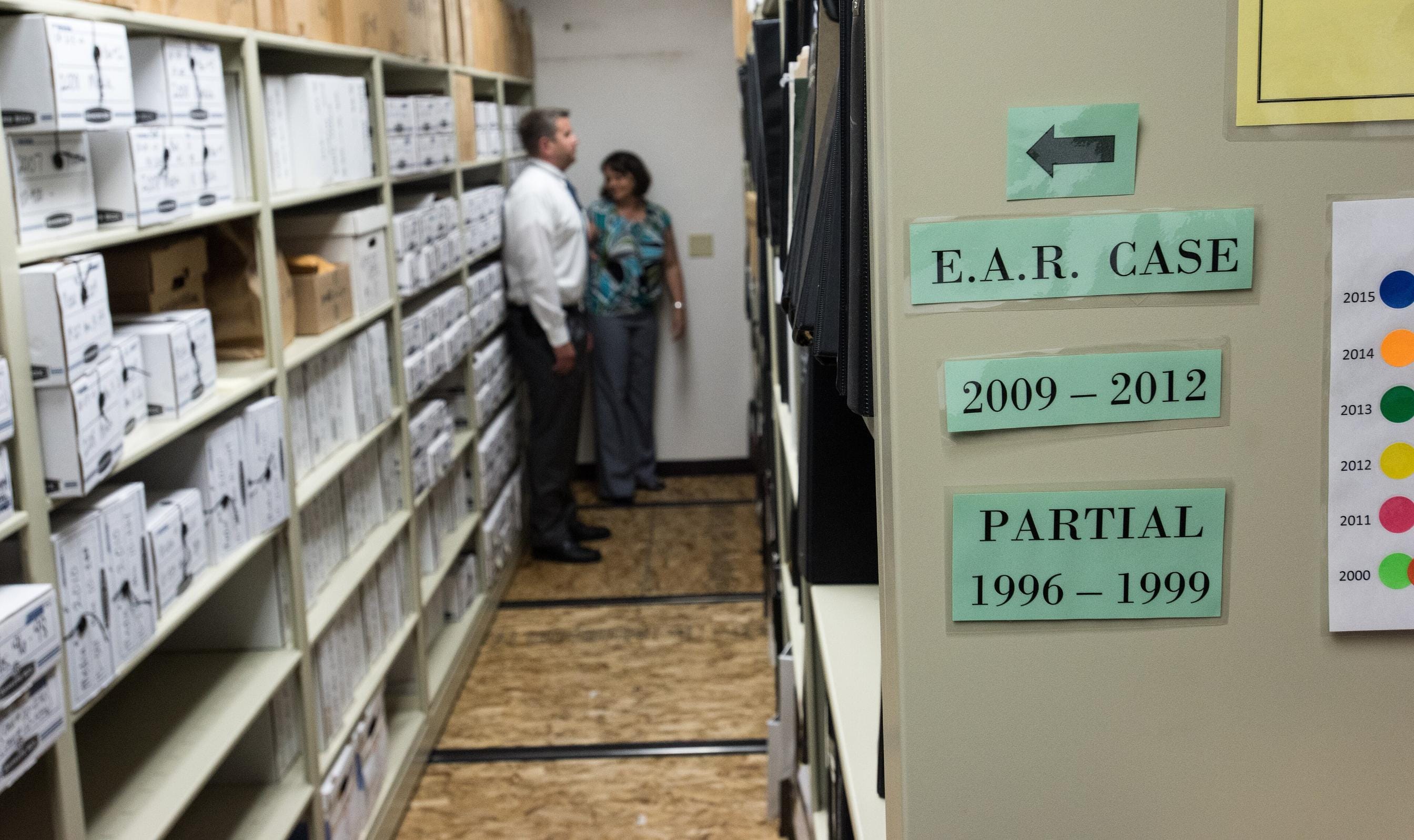
Challenges Police Departments Face Managing Physical Evidence
Police departments face unique challenges when managing physical evidence that distinguish them from other organizations. The combination of high evidence volumes, strict legal compliance requirements, evidence security needs, chain of custody complexity, and the critical importance of evidence to case outcomes creates a perfect storm of management challenges.
Lost or Misplaced Evidence
One of the most damaging and frequent challenges police departments face is the loss and misplacement of physical evidence. With hundreds or thousands of evidence items stored in evidence rooms across jurisdictions, maintaining accurate tracking of evidence location becomes nearly impossible with manual systems.
- Evidence checked out but never returned: Investigators remove evidence for investigation or analysis but forget to return it, leaving no record of location.
- Misfiled or lost within evidence room: Evidence is shelved improperly or removed by staff and never returned to its location, becoming effectively lost.
- Evidence loss during transitions: When staff leave, retire, or transfer, evidence may disappear without accountability or documentation.
- Duplicate evidence and confusion: Multiple versions of same evidence may exist, causing confusion about which is the official item for trial.
- Case-critical evidence becomes unavailable: Lost evidence often is discovered only when needed for trial, causing cases to be dismissed.
- Destroyed evidence or chain of custody break: Once evidence is lost, proving proper handling becomes impossible, destroying case viability.
Chain of Custody Documentation Gaps
Legal standards require complete, unbroken chain of custody documentation proving who handled evidence, when, and for what purpose. Manual systems create dangerous compliance gaps:
- Incomplete documentation: Manual logbooks frequently miss recording who handled evidence or when, creating chain of custody breaks.
- Illegible or ambiguous entries: Handwritten documentation may be illegible or unclear, creating admissibility challenges in court.
- Time gaps and delays: Evidence handling may not be documented until hours or days later, creating gaps defense attorneys exploit.
- No timestamp accuracy: Without automatic documentation, precise time records required for legal admissibility cannot be proven.
- Inability to prove proper handling: Courts cannot rely on incomplete manual documentation, leading to evidence suppression or case dismissal.
- Brady disclosure challenges: Prosecutors struggle to prove proper evidence handling when disclosing to defense counsel, creating litigation exposure.
Storage and Security Issues
Police departments must secure evidence from unauthorized access, theft, or tampering, yet manual systems create serious security vulnerabilities:
- No access controls: Without systematic controls, anyone with evidence room access can remove evidence without detection or authorization.
- Insider threat vulnerability: Corrupt officers or staff can access, remove, or tamper with evidence with no record.
- Evidence theft: Valuable evidence (drugs, cash, weapons) can be stolen without detection, enabling criminal networks.
- Evidence contamination: Without access controls, evidence may be handled improperly, compromising forensic integrity.
- No tampering detection: Manual systems cannot detect if evidence has been altered or falsified, undermining trial viability.
- Vulnerability to destruction: Evidence can be destroyed or removed without any record, preventing prosecution.
Evidence Contamination and Integrity Risks
Forensic evidence is only valuable if integrity and chain of custody are maintained. Manual systems create contamination and integrity risks:
- Cross-contamination: Evidence stored near incompatible items may be contaminated, destroying forensic value.
- Environmental damage: Poor storage conditions can degrade evidence (DNA, biological evidence, documents).
- Improper handling: Without training enforcement, evidence may be handled improperly, contaminating forensic evidence.
- Unknown handling history: When chain of custody is broken, evidence integrity cannot be proven in court.
- Storage degradation: Evidence stored in inadequate conditions deteriorates, becoming unusable for forensic analysis.
- Lost forensic value: Contaminated or degraded evidence becomes worthless for investigation or prosecution.
Lack of Access Controls and Accountability
Police departments need strict access controls and accountability mechanisms for evidence, yet manual systems provide neither:
- No role-based access: Any staff member may access any evidence regardless of assignment or clearance level.
- No audit trail: Who accessed evidence and when cannot be documented or verified.
- Accountability gaps: When evidence goes missing, departments cannot determine who is responsible.
- Undetected misconduct: Corrupt officers or evidence room staff can misuse evidence without detection.
- No verification of identity: Documentation often does not verify who actually removed evidence.
- Impossible to hold staff accountable: Without documentation, departments cannot enforce evidence handling policies.
Investigator Time Wasted Searching for Evidence
In manual systems, finding needed evidence becomes a time-consuming process that diverts investigators from solving crimes:
- Hours spent searching: Locating evidence in manual evidence rooms can require 30 minutes to several hours of investigator time.
- Delayed case progression: Investigators cannot move cases forward while searching for evidence.
- Analysis bottlenecks: Evidence analysis is delayed waiting for evidence to be located.
- Trial preparation delays: Cases go to trial unprepared because evidence location was unknown until last moment.
- Witness memory decay: Delays in evidence retrieval can cause witness memory to fade, damaging prosecution viability.
- Public safety impact: Investigators spend time on evidence logistics instead of solving crimes and protecting communities.
Why Manual Evidence Management Fails
Many police departments rely on manual evidence management methods-logbooks, filing systems, spreadsheets-that were never designed for the complexity of modern evidence management and the legal compliance standards of contemporary criminal justice.
Manual Logbook Limitations
Traditional evidence logbooks create fundamental problems:
- No real-time documentation: Evidence handling may not be logged until hours later, creating gaps.
- Handwriting legibility: Illegible logbook entries create chain of custody ambiguity in court.
- No verification of identity: Signatures may be forged or unclear, not proving who handled evidence.
- Difficult searches: Finding specific evidence handling records in logbooks requires manual page-by-page review.
- No tamper detection: Logbook entries can be erased or altered without detection.
- No compliance reporting: Cannot generate compliance reports or audit trails required for legal admissibility.
Spreadsheet Inadequacy for Evidence Tracking
Some departments turn to spreadsheets (Excel, Google Sheets) for evidence tracking, but spreadsheets are fundamentally inadequate for evidence management:
- No real-time location tracking: Evidence location must be manually entered and updated, causing outdated information.
- Manual entry errors: Staff errors in spreadsheet entries create inaccurate evidence records.
- No access controls: Spreadsheets cannot restrict access by role or prevent unauthorized viewing.
- Data tampering: Spreadsheet entries can be edited or deleted, destroying evidence integrity.
- No audit trails: Spreadsheets do not document who made changes or when-no tampering detection possible.
- Poor scalability: Large spreadsheets become slow, unreliable, and difficult to search.
Legal Compliance Failures
Manual systems create serious legal compliance problems that expose police departments to litigation and case dismissals:
- Chain of custody admissibility: Courts reject manual documentation as insufficiently reliable for chain of custody proof.
- Brady disclosure inadequacy: Prosecutors cannot properly prove evidence handling when disclosing to defense.
- Daubert challenges: Defense attorneys challenge unreliable manual documentation, causing evidence suppression.
- Evidence suppression: Courts suppress evidence when chain of custody is questioned and cannot be proven.
- Case dismissal: Cases are dismissed when evidence handling is questioned and manual documentation is deemed unreliable.
- Civil liability: Departments face civil litigation when evidence mishandling contributes to wrongful convictions.
No Tamper-Proof Audit Trails
Police departments need tamper-proof, authenticated audit trails that manual systems cannot provide:
- Manual entries can be altered: Logbook or spreadsheet entries can be modified without detection.
- No cryptographic verification: Cannot prove entry authenticity or that it has not been tampered with.
- Cannot detect tampering: No system to alert when someone attempts to alter evidence records.
- Admissibility challenges: Courts question reliability of documentation that can be altered undetected.
- Legal discovery vulnerability: Opposing attorneys can challenge integrity of manual evidence records.
- Regulatory non-compliance: Fails to meet FBI, DOJ, and agency evidence handling standards.
Unable to Prevent Evidence Loss or Theft
Manual systems cannot prevent or even detect evidence loss or theft in real time:
- No unauthorized access detection: Impossible to know if evidence was accessed improperly until inventory check.
- Delayed discovery of loss: Evidence may be gone for weeks or months before loss is discovered.
- Investigation delayed: Case may be undermined by time loss is discovered.
- No prevention capability: Manual systems cannot prevent theft or mishandling.
- Valuables at risk: Cash, drugs, weapons, and jewelry can be stolen without immediate detection.
- Corruption enablement: Corrupt staff can steal evidence with low risk of immediate detection.
Departmental Silos and Lack of Visibility
Manual evidence management often creates information silos where multiple departments lack visibility into evidence:
- No inter-agency visibility: Federal, state, and local agencies cannot see each other's evidence.
- Duplicate efforts: Multiple agencies may independently retrieve or analyze same evidence.
- Slow evidence sharing: Transferring evidence between agencies is time-consuming and error-prone.
- Coordination challenges: Difficult to coordinate when evidence is held by multiple agencies.
- Investigation delays: Joint investigations delayed waiting for evidence visibility and coordination.
- Task force challenges: Multi-agency task forces cannot efficiently share evidence visibility.
Why Evidence Management Slows Criminal Investigations
Evidence management is critical to investigation speed. When systems are inefficient, criminal investigations grind to a halt, and public safety is compromised. Police departments facing slow investigations often blame investigators, but the real problem is often inadequate evidence management systems that create bottlenecks.
Time-Consuming Evidence Searches
Without systematic evidence tracking, locating evidence requires exhausting searches:
- Hours per item: Locating specific evidence can consume 30 minutes to multiple hours.
- Case delays: Cases cannot proceed to analysis or trial while evidence is being searched.
- Investigator productivity loss: Productive investigative time is lost to evidence searching.
- Witness accommodation: Witnesses may need to return for interviews/identification after evidence is finally located.
- Analysis delays: Forensic testing cannot begin until evidence is located.
- Trial preparation impacts: Cases may not be trial-ready because evidence search delayed preparation.
Delayed Evidence Analysis and Testing
Evidence analysis is critical to solving cases, but manual systems create analysis bottlenecks:
- Location delays: Evidence must be located before analysis can begin.
- Chain of custody delays: Completing chain of custody documentation before analysis wastes time.
- Transfer delays: Moving evidence from storage to lab for analysis is time-consuming in manual systems.
- Lab backlogs: Delays in evidence transfer contribute to lab testing backlogs.
- Investigation stalls: Case investigations stall pending forensic results that cannot proceed due to evidence management delays.
- Case resolution delays: Cases take months longer to resolve when analysis is delayed.
Slow Inter-Agency Evidence Sharing
Multi-agency investigations are common, but manual systems make evidence sharing slow and complicated:
- Manual transfer coordination: Physically transferring evidence between agencies is time-consuming.
- Documentation duplication: Each agency must separately document evidence in their system.
- Visibility gaps: Agencies do not know evidence status during transfer or at receiving location.
- Loss risk during transfer: Evidence may be lost or misplaced during manual transfers.
- Investigation coordination failure: Task forces cannot efficiently share evidence or information.
- Federal-local coordination: FBI and local law enforcement struggle to coordinate evidence sharing.
Excessive Documentation Burden
Manual evidence management creates heavy documentation burden that diverts resources from investigation:
- Manual chain of custody forms: Time-consuming documentation for each evidence handling event.
- Staff administrative burden: Evidence room and investigative staff spend excessive time on paperwork.
- Compliance reporting: Complex manual compilation of compliance and audit reports.
- Investigator time loss: Investigators spend time on evidence documentation instead of investigations.
- Error-prone process: Manual documentation is error-prone, creating rework and corrections.
- Resource inefficiency: Evidence management consumes resources better directed to investigations and public safety.
Evidence Handling Staff Shortage
Manual evidence management requires extensive evidence room staffing that many departments cannot afford:
- Labor-intensive process: Manual systems require significant staff to locate evidence, document handling, and maintain inventory.
- Budget constraints: Evidence room staff budgets limit hiring, creating bottlenecks.
- Skill requirements: Staff require training on complex evidence handling and documentation procedures.
- Staff turnover: High-stress evidence room work creates turnover, losing institutional knowledge.
- Single points of failure: When key staff leave, evidence location knowledge goes with them.
- Cannot scale: Departments cannot efficiently grow evidence management capacity without proportional staff increases.
Legacy Systems and Outdated Processes
Many police departments operate with evidence management processes designed decades ago, creating inefficiency:
- Unnecessary manual steps: Processes require manual handling and documentation that could be automated.
- Resistance to change: Long-established procedures are difficult to change, even when obviously outdated.
- Training burden: Outdated processes require extensive training that doesn't transfer between staff changes.
- Inability to adapt: Legacy procedures designed for specific conditions work poorly in new situations.
- Efficiency lost to procedure: Investigators waste time on procedural requirements rather than investigations.
- Innovation blocked: Departments cannot implement beneficial improvements due to legacy system constraints.
Digital Evidence Management: The GOBO Solution
Police departments now have access to purpose-built digital evidence management systems specifically designed to address law enforcement challenges. Rather than adapting asset tracking systems or spreadsheet tools, modern RFID and barcode-based evidence tracking systems deliver law enforcement-grade capabilities:
A comprehensive Evidence Tracking System is designed from the ground up to solve police evidence management challenges:
- Real-time evidence location visibility: Know exactly where every piece of evidence is located at any moment, eliminating search time and lost evidence.
- Automated chain of custody: RFID gates automatically record who accessed evidence, when, and for how long-creating legally defensible documentation.
- Tamper detection and prevention: Alerts notify staff when evidence is accessed improperly or moved without authorization.
- Role-based access controls: Restrict access based on staff role, preventing unauthorized evidence access or handling.
- Comprehensive audit trails: Complete, tamper-proof documentation of all evidence handling for legal compliance and admissibility.
- Inter-agency evidence sharing: Enable secure, visible evidence sharing between law enforcement agencies with complete tracking.
- Evidence preservation tracking: Monitor storage conditions and document proper preservation of evidence integrity.
- Compliance reporting: Automated reports prove compliance with FBI, DOJ, and agency evidence handling standards.
Benefits of Digital Evidence Tracking for Police Departments
When police departments implement modern evidence tracking systems, they see substantial improvements across operations and case outcomes:
- Faster case investigation: Instant evidence location access instead of time-consuming searches accelerates investigations and case progression.
- Improved case prosecution: Legally defensible chain of custody documentation ensures evidence admissibility in court and case success.
- Evidence security: Role-based access controls and tamper detection prevent theft, corruption, and evidence mishandling.
- Reduced civil liability: Proper evidence management eliminates wrongful conviction risks from evidence mishandling.
- Increased evidence integrity: Environmental monitoring and access tracking ensure forensic evidence remains viable for analysis.
- Investigator productivity: Investigators focus on solving crimes instead of administrative evidence management tasks.
- Reduced staff burden: Automation eliminates manual documentation, reducing evidence room staffing requirements.
- Better public safety: Faster case resolution and higher case success rates improve public safety and community trust.
Conclusion
Police departments cannot continue to operate with evidence management systems designed for an earlier era. The stakes are too high, the legal risks too great, and the impact on public safety too critical. Lost evidence, broken chains of custody, evidence contamination, and operational inefficiency are not inevitable-they result from outdated systems and legacy processes.
Manual evidence management and spreadsheet systems cannot solve the modern challenges police departments face. They mask underlying problems while consuming staff time and creating legal vulnerabilities. Modern RFID and barcode-based evidence tracking systems represent a fundamental transformation in police operational capability. By implementing solutions like a purpose-built Evidence Tracking System, police departments can secure evidence integrity, create legally defensible chain of custody documentation, accelerate case investigation, reduce civil liability, and most importantly, improve public safety outcomes.
The question is not whether police departments will modernize evidence management, but when. Departments that lead this modernization will discover that law enforcement can be efficient, professional, and legally compliant-delivering justice through proper evidence handling and creating safer communities through faster case resolution.